Escaping the Shame Trap


The thesis of her talk went something like this: a pervasive sense of shame makes many of us—particularly in America—feel unworthy of human connection. Why the shame? Because in this perfectionistic culture, most of us believe we’re “not good enough . . . not thin enough, rich enough, beautiful enough, smart enough, promoted enough” to be worthy of love. So we can’t afford to let our guard down, become vulnerable, because letting others see us as we really are would mean we’d be rejected out of hand. Better to avoid emotional risk, avoid vulnerability, and numb ourselves to any pain we can’t escape.
The personal and social costs of this strategy, however, are great. “We are the most in-debt, obese, addicted, and medicated adult cohort in US history,” she told audiences, with shopping, food, drugs, and alcohol being well-tested means for numbing out unpleasant emotions. Besides that, the whole shame/vulnerability-avoidance game backfires: by dodging emotional risks, we miss out on the genuine human connection we’re so terrified of losing in the first place.
But Brown’s research had shown that some people have escaped the shame trap. How? They let themselves be vulnerable. “They believed that what made them vulnerable made them beautiful,” as Brown puts it. They somehow have developed a profound sense of inner worthiness. Rather than always thinking, I’m not good enough, they live in the belief I’m enough. In short, Brown said, “They were willing to let go of who they thought they should be in order to be who they were—which you have to absolutely do for connection.” Their mantra, so to speak, was “I’m just so grateful, because to feel this vulnerable means I’m alive.”
Investigating Shame
While public shaming has always been a popular sport, the advent of online shaming took it to unprecedented levels. Nowadays, the mass shaming of just about anybody for just about any reason, however trivial, is much easier, longer lasting, and possibly more poisonous than at any time in human history. It isn’t just the local villagers who jeer at the shamed person in the stocks for a day, but the increasing thousands and then millions who watch and revel in someone’s downfall and maybe tweet a few punches themselves, increasing the virulence of the attack and keeping it alive, often for months.
Unlike the toxic shame driven generally by child abuse, trauma, and neglect that Bradshaw describes, Brown focuses on what might be called normal shame, the kind most of us experience routinely. This much more quotidian form of shame is less like a profound wound and more like a chronic low-grade fever, which spikes dramatically from time to time, often provoked by ordinary daily incidents: a hurtful putdown by a friend, the excruciating morning memory of how loud you were at last night’s party, the bored sighs and eye rolls among colleagues as you stumble through an ill-prepared presentation, the certainty that everybody in the room is younger, better looking, more stylishly dressed than you, and so forth ad infinitum. Of course, we all engage in ordinary shaming acts ourselves as well; even nice people are frequently not nice. And if we have a scintilla of empathy for others, these acts of ours cause us to feel shame for the shame we’ve caused—a perfect circle of shame begetting shame.
As Brown points out, shame is so painful, so hard to experience, that our instinct is to haul ourselves back into our hidey-holes, go into what she calls “lizard-brain survival mode,” or else don various emotional masks and armor and try to avoid ever again being vulnerable enough to risk being so painfully exposed and belittled. In fact, we can’t stand even the word vulnerability—it sounds like sick kittens and toddlers with teddy bears and endless whining about the suffering of our “inner child.” After all, it’s the opposite of strength, toughness, and steely determination, right? And even if, as Brown defines it, vulnerability means “uncertainty, risk, and emotional exposure” and is “the core of all emotions and feelings . . . the birthplace of love, joy, belonging, trust, intimacy, creativity, and all the good things,” who wants to be this poor, soft, soppy vulnerability baby? Certainly, vulnerability won’t get you a corner office or admission to Harvard, or even pay the rent!
But in a startling feat of semantic legerdemain, Brown has taken the concepts of shame and vulnerability and turned them completely on their heads. As she sees it, shame is universal and normal and, far from being something to hide and avoid, can be a kind of goad—however unpleasant—to making changes in our lives for the better. In short, she subversively makes shame less shameful, a part of the ordinary human condition. So the question isn’t why shame, but what to do about it. Can we really turn this sow’s ear into a silk purse?
In the following interview with Networker editor Rich Simon, Brown discusses the applications of her work for the practice of psychotherapy.
An Interview with Brené Brown
NETWORKER: Within the therapy world, it was probably John Bradshaw who first explored the central role of shame in personal transformation. How would you compare Bradshaw’s perspective with your own?
BROWN: I’m pretty sure that I wouldn’t be doing this work without Bradshaw’s book Healing the Shame that Binds You. But his perspective was shaped by the recovery movement and his own interest in evolutionary biology. As a grounded theory researcher and social scientist, I come at the subject differently. Rather than starting with existing theories, grounded theory researchers build an understanding of a concept based on people’s lived experiences. The theory emerges fully from the data collected from research participants and is then placed in the context of existing theories. One of the reasons grounded theories feel relevant to people is simply because the work is built on their experiences. Our job is to stay out of the way, keep our preconceived ideas in check, and use powerful, resonating language to make connections and conceptualize what we’ve learned. In many ways, it’s similar to clinical work.<
NW: Your work is filled with unique expressions describing the ways we all try to cover up our sense of shame and inadequacy. I love the image of the “vulnerability hangover”! It seems to give people a sense of discovering something inside themselves that was always there right below the surface but that they hadn’t noticed quite so clearly before. Does that come naturally to you?
BROWN: For me, finding the right words is so painstaking. Maybe it’s a sophistication-in-simplicity kind of thing, but it’s laborious. I can struggle over the single right word for months. I’ve had to unlearn what I was taught in my doctoral work—-that being too accessible can be hazardous to your career. In the eyes of some people, it means that you’re not smart. But I’ve overcome my need to sound like an expert and prove myself constantly. In fact, a central part of my research method is finding a way to name basic human processes that enables people to recognize them in themselves and realize that everyone else can recognize them too.
The Daring Way
NW: You’ve developed your own training program for mental health professionals called The Daring Way. How is it different from the training that therapists might get elsewhere?
BROWN: At the core of The Daring Way is the axiom that you have to do this work in order to do this work. It’s based on the idea that what gets in the way of therapists’ being more effective usually isn’t professional development: it’s personal development in the context of the work. I also think it’s important to put together a community of people who are not only applying the work in their practices, but also doing the work themselves. The first day of all The Daring Way trainings, we ask people the same five questions, and keep referring to them throughout our time together: What brought you here? What are your fears/concerns? What would a successful experience look like for you? What support do you need from this group to do the experential work that’s part of this training? What boundaries need to be put in place for you to feel safe?
One of the main shame triggers for therapists is the fear of not being perceived as good enough by other therapists. They don’t want other people to know things about them that might indicate that they don’t have their shit together, like “I’m going through a divorce right now” or “I’ve got a son in rehab.” But the whole idea of The Daring Way is that everybody has a life story filled with heartaches and experiences where they’ve fallen. If not, they’re not in a position to help others. Part of what makes The Daring Way unique is the importance of recognizing the strengths in our imperfections. We need to stay aware of our darkness in order to bring the light to those we’re trying to serve. For example, I can’t imagine a client wanting to work through shame with a therapist who can’t relate to what shame feels like and how scary it is to surface it and talk about it. Shared vulnerability to human experiences like shame, grief, and scarcity is such an important core of the therapeutic relationship.
NW: Specifically, how do you bring the participants’ struggles with their own sense of shame and vulnerability into the training process?
BROWN: When I ask a room of 200 therapists, “How many of you believe shame is the cornerstone of what you deal with every day in your practices?” 100 percent of the hands go up. And then when I ask, “How many of you have actually studied shame, dug into shame as a construct, really looked at it in your formal training?” probably four or five hands go up. The work around this in The Daring Way is very experiential. Everyone creates what we call shame art. For this project, one young woman I remember composed and played a haunting melody on the oboe, an instrument she hadn’t picked up for seven years. The last time she’d played was when she’d been an undergrad music major and had been told that she’d never make it as an oboist.
There was a single dad in that same group, who’d told his son about his shame art project while he was tucking the boy in one night. The boy said, “I know what that means. Shame is when you look like this,” and the kid crouched in the corner of his bedroom like a scared animal. So the dad said, “Let’s make this art project together.” And together they built a box that had a giant hand in it pointing at a child in the corner. All around the box were expressions like “You’re stupid,” “You’re not smart enough,” “You belong in the slow class.”
When people present their shame art, it’s profoundly transformative for everyone involved. Throughout the training, we talk about the importance of therapists’ finding appropriate ways to share their vulnerability with clients. We believe that a big part of what makes therapy work is the client’s seeing the therapist as a person who intimately knows shame and vulnerability. And so being able to externalize through art the things that are usually unnamed and unspeakable inside of us is very powerful.
NW: What else is distinctive about The Daring Way?
BROWN: At the end of a training program, we ask participants what the most transformative learning experience was, and it’s always the psychoeducational parts, like understanding the differences among shame, guilt, humiliation, and embarrassment. It’s getting them to the point where they can say, “Okay, now I’m clear what shame is. Oh, okay, guilt, that’s different.” Or it’s debunking the myths of vulnerability so they can say, “Oh, vulnerability isn’t weakness; being vulnerable is actually an act of courage. Real vulnerability isn’t oversharing: it’s sharing with boundaries.” There’s a tremendous power in finding the right language for describing things. Early on, we asked more than 1,000 people to name every emotion that they’ve experienced in their lives. Do you know what the mean number of emotions is? Three: happy, sad, pissed off.
NW: There’s a kind of a waked-up quality to what you’re calling psychoeducation that owes a lot to your abilities as a wordsmith and storyteller. For your huge audience, you’ve become such an immediate presence as a kind of companion on their personal journey.
BROWN: I think that’s the connective tissue of what I’m trying to do. But I also think people have been drawn to my work because my research asks the basic question about meeting the challenges in our lives: what do men and women who manage to get back up after deep disappointment, heartbreak, grief, and failure share in common? What enables some people to become even more tenacious and courageous as a result of falling? In Rising Strong, I show that what they share is a three-stage process: the Reckoning, the Rumble, and the Revolution. People have to reckon with difficult and intense emotions. They then have to rumble with the hard stories they’re telling themselves that can sometimes get in their way of growing and moving on in their lives. Finally, the revolution comes when they recognize their part in making up the stories they’re telling themselves that are getting in their way.
So one of the things we’ve developed is what we call the “rumble glossary.” It gives people language for emotions and experiences that they literally don’t have words for. For example, we’ve identified anger as a secondary emotion. So if you’re pissed off, what’s under that? Is this really disappointment, or is this grief? There was just an interesting article in the New York Times that talks about the importance of distinguishing between the nuances of difficult emotions and how that capacity is positively correlated with recovery time from difficult setbacks in life. Everyone wants to be brave enough to rumble with these challenging emotions, but what are they? First you’ve got to name them.

Dr. Brené Brown is a research professor at the University of Houston, where she holds the Huffington Foundation Endowed Chair at the Graduate College of Social Work. She also holds the position of visiting professor in management at the University of Texas at Austin McCombs School of Business.
Brené has spent the past two decades studying courage, vulnerability, shame, and empathy. She is the author of six #1 New York Times bestsellers and is the host of two award-winning podcasts, Unlocking Us and Dare to Lead.
Brené’s books have been translated into more than 30 languages, and her titles include Atlas of the Heart, Dare to Lead, Braving the Wilderness, Rising Strong, Daring Greatly, and The Gifts of Imperfection. With Tarana Burke, she co-edited the bestselling anthology You Are Your Best Thing: Vulnerability, Shame Resilience, and the Black Experience.
Brené’s TED talk on the Power of Vulnerability is one of the top five most-viewed TED talks in the world, with over 60 million views. Brené is the first researcher to have a filmed lecture on Netflix, and in March 2022, she launched a new show on HBO Max that focuses on her latest book, Atlas of the Heart. Brené spends most of her time working in organizations around the world, helping develop braver leaders and more courageous cultures. She lives in Houston, Texas, with her husband, Steve. They have two children, Ellen and Charlie, and a weird Bichon named Lucy.
Speaker Disclosures:
Financial: Brené Brown is the CEO for The Daring Way and Founder and CEO of COURAGEworks and Brave Leaders Inc. She is a research professor at University of Houston Graduate College of Social Work. She is an author of numerous books and receives royalties from various publishers. Dr. Brown receives compensation as a speaker for numerous other organizations. Brené Brown receives a speaking honorarium from PESI, Inc. She has no relevant financial relationships with ineligible organizations.
Non-financial: Brené Brown has no relevant nonfinancial relationship to disclose.
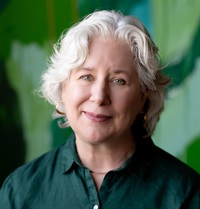
Kirsten Lind Seal, PhD, LMFT, holds an MA in counseling psychology and a PhD in couple and family therapy from the University of Minnesota. Dr. Lind Seal teaches ethics at two universities and regularly conducts trainings on ethics and cross-cultural issues at the local, regional and national level. She is currently adjunct associate professor at Saint Mary’s University of Minnesota and core ethics faculty (adjunct) at Chaminade University of Honolulu. She has extensive training in teaching and learning: at Saint Mary’s she was a Teaching Fellow (2013-2014), and she completed the Preparing Future Faculty Certificate Program at the University of Minnesota in 2014.
Dr. Lind Seal’s research has been published in Psychology Today, Journal of Marital and Family Therapy and Family Process. She has published several case studies and an ethics focused “In Consultation” piece in the Psychotherapy Networker and has reviewed for The Journal of Critical Psychology, Counselling and Psychotherapy (UK). She is currently conducting a scholarship of teaching and learning research project examining the impact of her cultural context ethical decision-making model on graduate students’ cultural growth and ethical decision-making at Chaminade University of Honolulu.
Dr. Lind Seal’s professional memberships are with the Minnesota Association for Marriage and Family Therapy and the New England Association for Family and Systemic Therapy, for which organizations she has created, presented and recorded numerous trainings and webinars on a variety of ethical issues. She has been participating in ongoing monthly anti-racism groups through NEAFAST for the last three years.
She has a completely virtual private practice where she works with individuals, couples and family, and offers ethics consultations to colleagues. She has been interviewed as a content expert by MPR, CNN.com, and the Minneapolis Star Tribune and has for the last 9 years has been a regular on-air contributor on Relationship Reboot, a weekly segment on relationships on WCCO TV’s Channel 4 (CBS Twin Cities).
Speaker Disclosures:
Financial: Kirsten Lind Seal maintains a private practice and has employment relationships with Chaminade University of Honolulu and Saint Mary’s University of Minnesota. She receives a speaking honorarium from Psychotherapy Networker and PESI, Inc. She has no relevant financial relationships with ineligible organizations.
Non-financial: Kirsten Lind Seal is a member of the Minnesota Association of Marriage and Family Therapy, a contributor/creator of segments on Mid-morning WCCO TV and a member of The New England Association For Family And Systemic Therapy.


