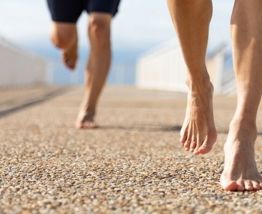
Let the Joint-by-Joint Approach Guide Your SI Joint Treatment


And to successfully treat this kind of pain, you must look at the joints above and below the source.
In this quick video, Dr. Jon Mulholland walks you through the joint-by-joint approach: why it works and how it can greatly influence your treatment plan.
Best of all? This approach is applicable for all your patients, from a “regular Joe” to an Olympic athlete — Dr. Mulholland has treated them all by utilizing this protocol.
Let’s consider a typical 55-year-old golfer. He’s typically sitting at his desk, sitting in the car…no hip mobility, thoracic spine blocked up, weak through the core.
The first warm day in May, he gets out on the golf course and is swinging a golf club over 200 times.
A normal golf swing requires excellent hip mobility, particularly internal rotation on both legs. The golfer in this example probably doesn’t have any of that. So what does he do? He’s still cranking out that golf swing. He’s doing it, but he’s finding that rotation elsewhere since he’s not getting it in his hips.
Where is he most likely getting it based on the joint-by-joint approach? Either the joint above or the joint below the problem.
If our golfer doesn’t have the rotation in his hips, he’s going to be rotating his lumbar spine or knees.
He’ll come into your office with lower back pain, but you'll only be patching things up until we fix his hip mobility. That’s the concept of the joint-by-joint approach.
Thoracic mobility. Lumbar SI stability. Hip mobility. That’s what we need to look at in order to treat SI joint pain. Look above and below the source of the pain.

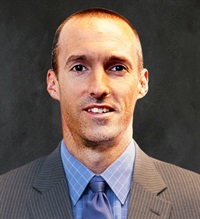
Dr. Jon Mulholland has over 20 years’ experience helping athletes of all levels with injury recovery and performance enhancement. In addition to running his own practice, Dr. Mulholland has also acted as the chiropractic consultant for the United States Olympic Training Center in Lake Placid, NY, successfully treating dozens of Olympic athletes. He has traveled extensively as one of the team chiropractors for the US Bobsled & Skeleton teams. He has worked multiple World Championship events in a variety of sports and has treated athletes from dozens of different countries. He was the sports medicine & performance enhancement consultant for the New Zealand Cycling teams at the 2012 Summer Olympic Games in London, where he helped the team win two Olympic medals. He is the owner/operator of Ideal Athlete Chiropractic, a sports chiropractic clinic in Plattsburgh, NY, He also travels extensively lecturing on a wide variety of sports injury and rehabilitation topics.
Speaker Disclosures:
Financial: Dr. Jonathan Mulholland is the owner and chiropractor of Ideal Athlete Chiropractic. He receives a speaking honorarium from Rock Tape & Footleveler's. Dr. Mulholland receives a speaking honorarium and recording royalties from PESI, Inc. All relevant financial relationships with ineligible organizations have been mitigated.
Non-financial: Dr. Jonathan Mulholland is a member of the American Chiropractic Board of Sports Physicians, the International Federation of Sports Chiropractic, the National Strength & Conditioning Association, the American Academy of Hospital Chiropractors, the Society of Weight-Training Injury Specialists, and the American Chiropractic Association.