Mastering Lab Interpretation: Hypokalemia
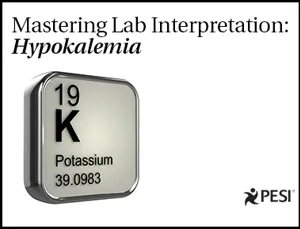
1006 20161012 124904 Hypokalemia
What can the T wave and the U wave on an EKG tell us about potassium levels?

When replacing potassium, if I have a choice of IV or orally, which one is preferred??

Get the answers to these questions and more in this quick video.
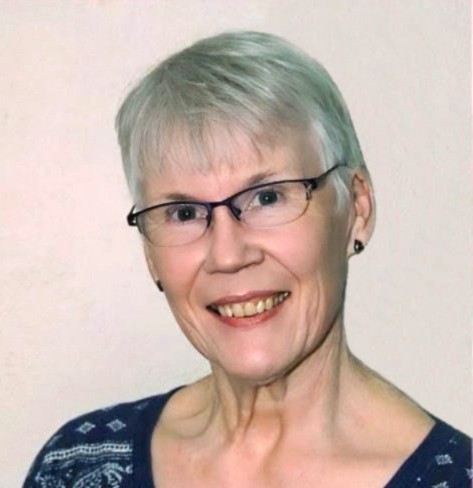


Cyndi Zarbano MSN-Ed, CCRN, PCCN, CMSRN, LNC, NLCP

Cyndi Zarbano, MSN-Ed, CCRN, PCCN, CMSRN, LNC, NLCP, brings 30 years of frontline nursing experience across intensive care, emergency, and flight nursing – and she continues to take patient assignments as an intensive care nurse at Mayo Clinic in Minnesota. That direct patient care isn’t just background; it’s the foundation of everything she teaches.

A sought-after speaker on national and international stages, Cyndi is known for delivering evidence-based clinical content with the kind of real-world perspective and genuine humor that makes learning stick. She practices what she preaches when it comes to professional growth, currently pursuing her third master’s degree – this one in leadership.

Her expertise extends well beyond the bedside. Since 2008, Cyndi has served as a legal nurse consultant on more than 300 cases spanning plaintiff, defense, and boards of nursing matters. She has accumulated critical perspectives on clinical documentation, standards of care, and the moments when nursing judgment makes all the difference. A 10-year US Navy veteran who left service as a Lieutenant Commander, she carries that same precision, discipline, and commitment to excellence into every room she enters.


Speaker Disclosures:
Financial: Cynthia Zarbano is the owner of Clinical Review Consultants and has an employment relationship with Mayo Mankato. She receives a speaking honorarium, recording, and book royalties from PESI, Inc. She has no relevant financial relationships with ineligible organizations.
Non-financial: Cynthia Zarbano has no relevant non-financial relationships.

Let's Stay in Touch

Get exclusive discounts, new training announcements & more!

You May Also Be Interested In These Related Blog Posts
1961 20210816 115308 Blog Calculatingmap Mobile (1)
Calculate Mean Arterial Pressure (MAP) with Confidence
Critical care and emergency nurse expert Sean G. Smith provides an easy-to-use strategy for understanding and calculating Mean Arterial Pressure (MAP).
1642 20190625 080503 Demystifying Blog Mobile 380X290
A Guide to Understanding ABGs
A simple cheat sheet to reference when reading Arterial Blood Gas (ABG) test results.
Children Doing Activity In Art And Crafts
The Feelings Monster: An Attachment-Centered Play Therapy Technique for Disruptive Behavior Disorders
Play therapist Clair Mellenthin introduces the Feelings Monster Box—a family-based intervention for children with ODD and Conduct Disorder rooted in attachment theory.
Attached Child Hugging His Grandfather
How Attachment Shapes the Roots of Childhood Disruptive Behavior Disorders
Clair Mellenthin, PhD, LCSW, RPT-S™, explores how insecure and disorganized attachment histories drive the development of Oppositional Defiant Disorder (ODD) and Conduct Disorder (CD), why treating...
1961 20210816 115308 Blog Calculatingmap Mobile (1)
Calculate Mean Arterial Pressure (MAP) with Confidence
Critical care and emergency nurse expert Sean G. Smith provides an easy-to-use strategy for understanding and calculating Mean Arterial Pressure (MAP).
1642 20190625 080503 Demystifying Blog Mobile 380X290
A Guide to Understanding ABGs
A simple cheat sheet to reference when reading Arterial Blood Gas (ABG) test results.
Children Doing Activity In Art And Crafts
The Feelings Monster: An Attachment-Centered Play Therapy Technique for Disruptive Behavior Disorders
Play therapist Clair Mellenthin introduces the Feelings Monster Box—a family-based intervention for children with ODD and Conduct Disorder rooted in attachment theory.
Attached Child Hugging His Grandfather
How Attachment Shapes the Roots of Childhood Disruptive Behavior Disorders
Clair Mellenthin, PhD, LCSW, RPT-S™, explores how insecure and disorganized attachment histories drive the development of Oppositional Defiant Disorder (ODD) and Conduct Disorder (CD), why treating...