When clients come to you seeking relief from their traumatic pasts it feels like familiar work. Difficult, but familiar.
But in cases of extreme past abuse, you may have clients who seem to be losing time. Not remembering things they’ve said and done.
You may even encounter multiple identities that can alarm you.
Despite deeply entrenched views, studies suggest dissociative identity disorder is more prevalent than once believed. And if you treat trauma, the likelihood of you encountering a client with DID may be higher than you think.
Without a therapeutic plan, you could find yourself unprepared and unable to help when these clients show up in your caseload.
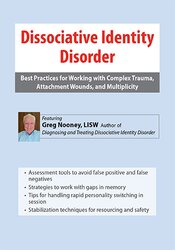
Greg Nooney is the author of Diagnosing and Treating Dissociative Identity Disorder (NASW Press, 2022). A therapist for more than 35 years, he’s worked with hundreds of clients with severe trauma, dissociative symptoms, and dissociative identity disorder.
Watch him for this training and discover a step-by-step guide on how you can diagnose, stabilize and treat trauma in these complex clients.
When you purchase you’ll get:
- Assessment tools to avoid false positive and false negatives
- Clinical strategies to work with secrets and gaps in memory
- Tips for handling rapid personality switching in session
- Stabilization techniques for resourcing and safety
- Approaches for doing trauma specific work with DID clients
Don’t miss this chance to enhance your trauma treatment toolbox and help clients overcome the pain their parts are carrying.
Purchase today!