
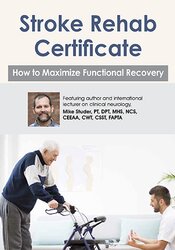
2-Day: Stroke Rehab Certificate: How to Maximize Functional Recovery
- Speaker:
- Mike Studer, PT, DPT, MHS, NCS, CEEAA, CWT, CSST, CBFP, CSRP, FAPTA
- Duration:
- 11 Hours 48 Minutes
- Format:
- Audio and Video
- Copyright:
-
Mar 04, 2025
- Product Code:
- POS065162
- Media Type:
- Digital Seminar

Description
After suffering a stroke, many emerge feeling trapped in a body that no longer works and fear the life they knew is gone. Furthermore, standard treatment strategies end with persistent long-term deficits and very basic gross motor skills at best. Your patient does not have to accept this fate and with the correct skillset, neither should you. Stroke rehabilitation does not have to be an either/or scenario – patients do not have to choose between walking or the ability to regain use of their arm!
While you may know techniques to facilitate movement in a flaccid UE and LE are similar:
- Do you know how to improve each individually as movement emerges?
- Are you able to easily identify methods to “force” movement and drive neuroplasticity in motor control and sensory recovery?
- Can we re-create automatic movement (without thinking)?
Don’t miss this opportunity to get answers to these questions and leave with a groundbreaking evidence-based skillset to achieve life changing results for your patients!
You are working with a 68-year-old patient 2 weeks after a stroke who is demonstrating minimal wrist and finger extension + sensory impairment in their affected arm. Can you help this person achieve full use of their arm to dress, carry items while walking, open doors and turn on faucets? After this course – your response should be a resounding…”Yes!”
Unfulfilled rehabilitation potential is one of the greatest losses a stroke patient may face. Don’t miss your opportunity to learn the skills needed to completely redefine what is possible for quality of life after a stroke.
Credit
Speaker
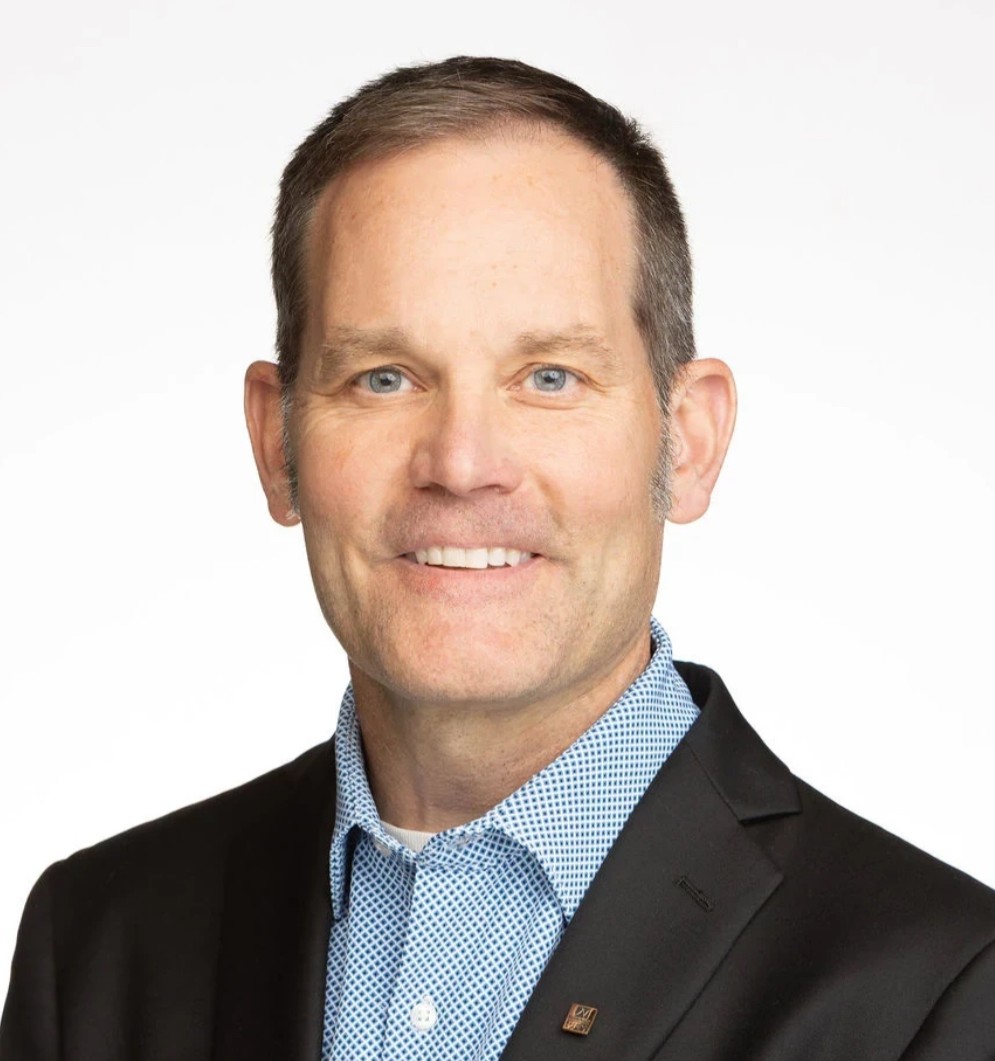
Mike Studer, PT, DPT, MHS, NCS, CEEAA, CWT, CSST, CBFP, CSRP, FAPTA Related seminars and products
Mike Studer, PT, DPT, MHS, NCS, CEEAA, CWT, CSST, CBFP, CSRP, FAPTA has been a PT since 1991, board certified in neurologic PT in 1995, and a private practice owner since 2005. Dr. Studer has been an invited speaker covering all 50 states, 13 countries, and 5 continents speaking on topics ranging from cognition and psychology in rehabilitation, aging, stroke, motor learning, motivation in rehabilitation, balance, dizziness, neuropathy and Parkinson Disease. Dr. Studer was the founder and operator of Northwest Rehabilitation Associates in Oregon for 18 years and is now a co-founder and co-owner of Spark Rehabilitation and Wellness in Bend, OR. He is an adjunct professor at Touro University and additional appointment at UNLV. Dr. Studer assists the USC-led national network of neurologic PT residencies (Neuroconsortium) as well.
In 2011, Mike was recognized as Clinician of the Year in the Neurologic and (in 2014) the Geriatric Academies of the APTA. He received the highest honor available in PT in 2020, being distinguished as a Catherine Worthingham Fellow of the APTA in 2020, joining a group of under 300 persons at the time for the history of the profession. Mike’s honors additionally reflect his service for Vice Presidency of the Academy of Neurologic PT, the Mercedes Weiss award for service to the Oregon chapter of APTA. He holds a trademark in dual task rehabilitation and has a patent pending on the same. Over his career, Mike has authored over 40 articles, 7 book chapters, and routinely has clinical research projects in affiliation with one of many universities. He is a consultant to professional athletes including Major League Baseball players, competitive divers, and some of the most prolific climbers in world history. As a very fun and lighthearted note, Mike is the four time and current WR holder for the fastest underwater treadmill marathon, a mark that was set most recently in January 2022. Most recently, Mike authored The Brain That Chooses Itself, a practical and applications-based guide to increasing both healthspan and lifespan for laypersons and medical professionals alike.
Speaker Disclosures:
Financial: Mike Studer is the co-founding member and co-owner of Spark Rehabilitation and Wellness and has employment relationships with Touro University, the University of Nevada, and Post Acute Medical. He previously received a speaking honorarium from SMARTFit. Mike Studer receives a speaking honorarium, recording royalties, and a consulting fee from PESI, Inc. He has no relevant financial relationships with ineligible organizations.
Non-financial: Mike Studer is a member of the American Physical Therapy Association, the Vestibular Disorders Association, and the Oregon Physical Therapy Association. He serves on the advisory board of Rehab Management and ADVANCE.
Additional Info
Webcast SchedulePlease note: There will be a lunch and two 15-minute breaks; one in the morning and one in the afternoon. Lunch and break times will be announced by the speaker and at their discretion. A more detailed schedule is available upon request.
Questions?
Visit our FAQ page at www.pesi.com/faq or contact us at www.pesi.com/info
Access for Self-Study Program (Non-Interactive)
You will have access to this product for 12 months from the date of purchase.
Objectives
- Analyze objective assessment data to gauge prognosis, treatment timeline and progression.
- Propose 3 techniques to successfully facilitate motion in the flaccid UE.
- Propose 3 techniques to successfully facilitate motion in the flaccid LE.
- Propose 3 applications of forced use therapy for UE sensory and motor recovery.
- Propose 3 applications of forced use therapy for LE motor recovery.
- Investigate evidence-based applications for post stroke gait training to achieve independent community ambulation.
- Demonstrate how to use dual task interference to promote automaticity in recovery of mobility.
- Demonstrate how to use dual task interference to promote automaticity in recovery of ADLs.
- Demonstrate effective documentation to support the use of dual task interference and demonstrate progress in divided attention.
- Discriminate spasticity vs tone, the functional implications, and the best evidence in management of each.
- Identify multidisciplinary coordination opportunities for incorporation of dual task interference to achieve team goals and patient outcomes.
- Identify objective interventions to rehabilitate impulse control with relevance for safety in mobility, MRADLs, ADLs, communication, and IADLs.
- Differentiate the 4 main modalities of distractions in clinical and real-world dual task (DT) applications.
- Analyze the three guiding principles of DT training.
- Investigate the physiology of attention and DT in normal, rehabilitative, and impaired conditions.
Outline
Neurophysiology of Stroke: How the Principles of Neuroplasticity and Motor Learning Work Together
- Mechanisms of neuroplasticity- why and how the brain reorganizes
- Recovery of motor control vs. compensations
- How the brain uses habituation, adaptation and compensations for functionality
- Therapeutic applications for introducing constraints, incentives and avoidances in neuroplasticity
- Understand the difference in ischemic and hemorrhagic stroke – and how that impacts rehab.
- When should rehab start? When can intensity start? When is someone “neurologically ready”?
- How your interventions promote change
Improve Prognosis After a Stroke: Personalize Care by Presentation, Person & Performance
- Debunk the myths of stroke: UE vs. LE; timing; and “where gains come from”
- Balance the elements challenge, gamification, success and failure to maximize neuroplasticity for each patient
- Apply autonomy as a catalyst for patient engagement
- Prime reward centers for possible success – beliefs are more important than we ever realized
- Shift to external, goal focused feedback to increase retention for motor skills
- Spasticity vs tone: differences, precursors and the treatments for each
- Goal action coupling – and how this can deepen patient engagement
Promote Return and Choice in the Affected UE: Improve Best Practices for Recovery
- Time spent, time expectations and reptations are largely under-dosed for UE
- Why you may want to focus on the hand first instead of the shoulder
- Integrate tasks that force sensory information and motor contribution
- Induce neuroplasticity with graded motor imagery: L/R discrimination and mirror therapy
- Utilize bilateral challenges to increase mirror neuron benefit, intensity, gamification, accountability and functionality
- Forced use applications for UE
- Applications in overtraining: HIIT, error-enhanced learning and amplifying error
- Add a dual task to increase intensity and attention
Promote Return of Function and Symmetry in the LE, Gait & Balance
- Forced use applications for LE
- HIIT and High intensity gait training
- What is HIIT, what isn’t, and why we use it...
- Tools for assisted functional recovery: weight bearing tasks in function: transfers, ADL, standing
- Defining improved gait... Independence, efficiency, quality, distance, speed?
- Novel clinical applications: motivational and exercise attributes
Patient Engagement: Facilitate Compliance, Intensity and Attendance
- Apply the principles of behavioral economics to movement: confirmation bias, nudge, gamification, familiarity bias, and loss aversion
- Self-efficacy is malleable and may be the most powerful variable across all severities of stroke
- Utilize the physiological tools of behavioral economics to apply nudge, gamification, and choice architecture
- Understand the dynamic balance of autonomy in treatment
- Fear: overcome with habituation, desensitization, reward cycle replacement, self-efficacy and wins.
The Future of Stroke Rehab: Progress in Technology and Science
- Robotics
- Virtual reality (VR) and Brain computer interfacing (BCI)
- Transcranial magnetic stimulation (TMS)
- HIIT, HIGT, task-specific circuit training, and early mobilization (acute care)
- The resurgence of comprehensive outpatient rehabilitation facilities (CORFs)
Cognitive Rehabilitation: Dual Task Tolerance, Function, Impulse Control, Affect & Awareness
- Recognize the most common sequelae of cognitive, affective, and attentional impairments sustained in stroke
- How to constrain attentional resources to improve tolerance, function, and awareness
- 4 simple ways to enhance awareness and maximize attention
Target Audience
- Physical Therapists
- Physical Therapy Assistants
- Occupational Therapists
- Occupational Therapy Assistants
- Nurses
Reviews
Satisfaction Guarantee
Your satisfaction is our goal and our guarantee. Concerns should be addressed to: PO Box 1000, Eau Claire, WI 54702-1000 or call 1-800-844-8260.
ADA Needs
We would be happy to accommodate your ADA needs; please call our Customer Service Department for more information at 1-800-844-8260.
PESI Mobile App
Access CE trainings on your phone or tablet through our free mobile app. Choose video or audio-only versions of online courses from the world’s best instructors, and complete your CE requirements anywhere, anytime, at your own pace.




Please wait ...