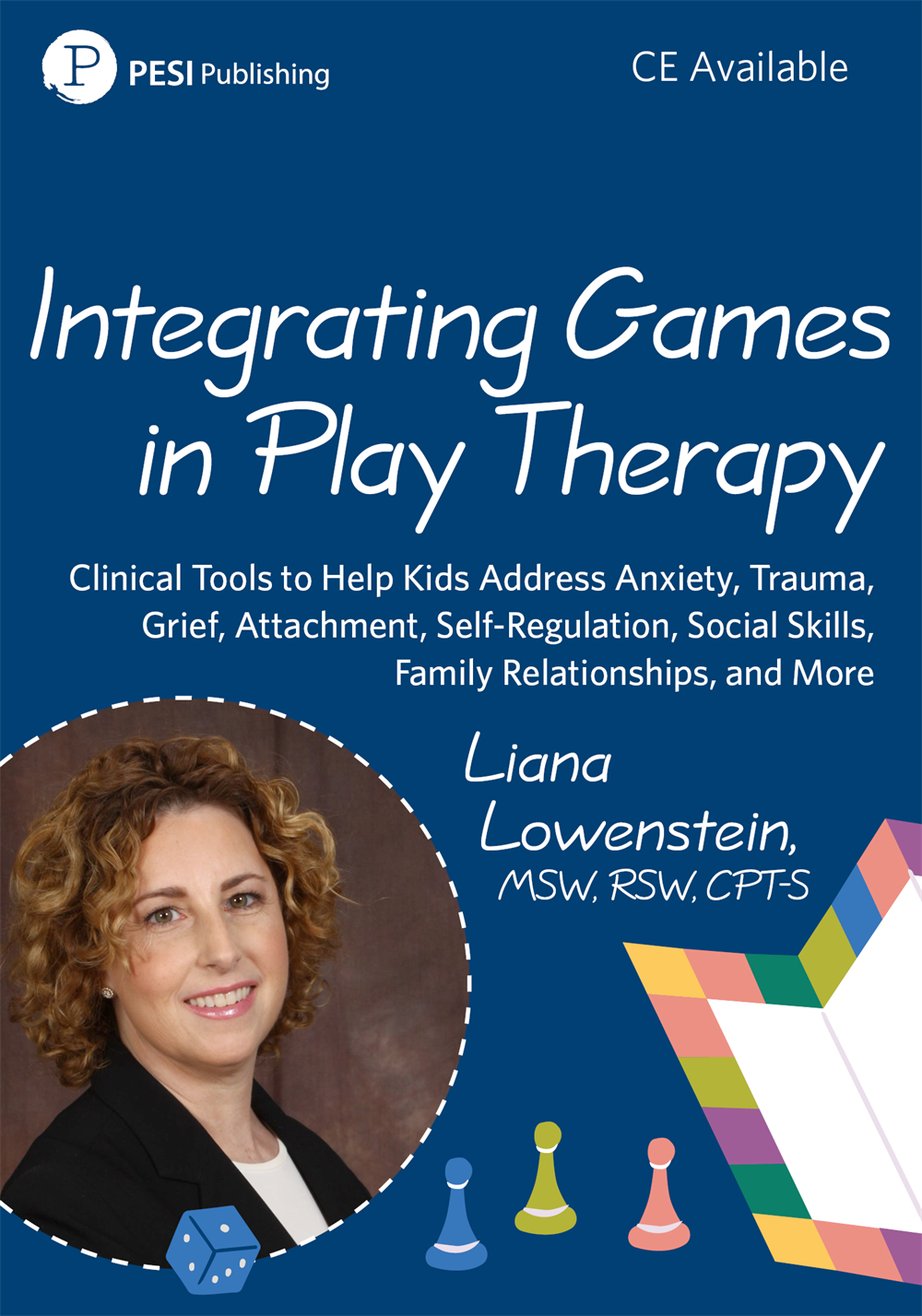
Games aren’t just fun – they’re powerful therapeutic tools!
This highly engaging workshop explores how to use games in play therapy as a medium for healing and growth in children, youth, and families in a way that is intentional and therapy goal-oriented.
Many children struggle to express themselves in traditional talk therapy, but through game-based play therapy, therapists can bypass resistance, build trust, and unlock emotional insight in a developmentally sensitive way.
In this practical and hands-on training, participants will:
- Explore the theoretical foundations of using games in play therapy.
- Discover criteria for selecting or adapting games to meet play therapy treatment goals.
- Learn how to use therapeutic responses and debriefing strategies to maximize clinical impact.
- Walk away with a ready-to-use toolbox of original therapeutic games to address a wide range of presenting issues in a play therapy session.
From games that build rapport and foster emotional expression to activities that target self-regulation, social skills, self-esteem, and family connection, this workshop offers a dynamic and creative approach to therapy.
Whether you're just starting out or are a seasoned play therapist, you'll gain a fresh toolbox of engaging, ready-to-use games to help children and families address a wide range of issues.