
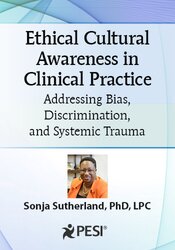
Ethical Cultural Awareness in Clinical Practice
Addressing Bias, Discrimination, and Systemic Trauma
- Speaker:
- Sonja Sutherland, PhD, LPC
- Duration:
- Full Day
- Product Code:
- LWC150923
- Brochure Code:
- PWZ96265
- Media Type:
- Live Webinar - Also available: Digital Seminar

Description
- How systemic racism gets under the skin: epigenetics, intergenerational trauma, and clinical implications
- Ethical treatment planning at the intersection of implicit bias and Social Determinants of Health
- Feedback Informed Treatment protocols to measure discrimination’s clinical impact
Most clinical training stops at “be culturally aware.”
But awareness alone doesn’t tell you what to do when a client’s anxiety is actually the body’s response to decades of accumulated stress, or when your own blind spot just damaged the trust you spent months building.
After 20 years in this field, I’ve watched too many well-meaning clinicians hit the same wall: they can see that something bigger than the individual is at play, but their training never gave them the tools to act on it. The result is treatment plans that miss the real story, and ruptures that go unrepaired because no one taught us how.
This training addresses that gap, and is one I wish I had access to 20 years ago.
You’ll learn how to:
- Recognize how Social Determinants of Health, implicit bias, and historical trauma shape the clinical presentations you see every day
- Broach conversations about identity and marginalization with confidence
- Repair therapeutic ruptures after microaggressions
- Apply the ACA, APA, NASW, and AAMFT ethics codes alongside the MSJCC and Multicultural Orientation Framework
- Use assessment instruments and Feedback Informed Treatment protocols to drive better outcomes with diverse clients
So join me and register today!
Sonja Sutherland, PhD, LPC
Credit
Speaker

Sonja Sutherland, PhD, LPC Related seminars and products
Sonja Sutherland, PhD, LPC, trains clinicians and supervisors in the development of cross-cultural responsivity. Renowned in the field, she has provided individual, group, and family therapeutic services in many different settings for adolescents and adults for 20 years. Within the last 6 years, Dr. Sutherland has provided training, researched, and published in the areas of racial trauma, cultural competence development, the provision of culturally responsive clinical intervention and supervision, and social justice advocacy. Dr. Sutherland’s primary clinical practice centers on providing clinical supervision services to post-masters clinicians pursuing licensure.
Dr. Sutherland has served as a guest lecturer, trainer, and presenter for various organizations including Kaiser, ESPYR, Telehealth Certification Institute, the Georgia Psychological Association and many others. Dr. Sutherland is a core faculty member at Walden University as well as the founder and CEO of Legacy Changers Worldwide, an organization dedicated to providing family education and mental and emotional wellness resources. In addition, Dr. Sutherland provides continuing education workshops and supervision for various organizations, as well as being the Chief Diversity Consultant to the President for Richmont Graduate University. She is also a member of the American Counseling Association (ACA), the Association for Multicultural Counseling & Development (AMCD), the Association of Counselor Educators and Supervisors (ACES), and the Licensed Professional Counselor Association of Georgia (LPCA-GA).
Speaker Disclosures:
Financial: Dr. Sonja Sutherland is the founder and CEO of Legacy Changers Training Institute for Mental Health Equity & Justice, LLC., Diversity Dialogues, and Legacy changers Worldwide, LLC. She has an employment relationship with Adams State University. Dr. Sutherland receives a speaking honorarium and recording royalties from PESI, Inc. She has no relevant financial relationships with ineligible organizations.
Non-financial: Dr. Sonja Sutherland is a member of the American Counseling Association, the American Counseling Association of Georgia, the Association for Counselor Educators and Supervisors, and the Association for Multicultural Development.
Additional Info
Access Period for Live WebcastYou will have access for 90 days after the program for review. For live CE credit, you must watch the live webcast in its entirety at its scheduled time and complete the CE quiz and evaluation within one week. Please note that this requirement may vary by credit type. Please see detailed credit information for specific requirements for each credit type.
Webcast Schedule
Please note: There will be a 70-minute lunch and two 15-minute breaks; one in the morning and one in the afternoon. Lunch and break times will be announced by the speaker and at their discretion. A more detailed schedule is available upon request.
Questions?
Visit our FAQ page at www.pesi.com/faq or contact us at www.pesi.com/info
Objectives
- Clarify the clinical impact of the connections between implicit bias, Critical Race Theory, and Social Determinants of Health and how this can inform ethical treatment.
- Analyze the impacts of historical and intergenerational trauma on epigenetics-related factors in diversity-based trauma, and the connection to Social Determinants of Health.
- Discuss ethical, culturally-responsive approaches to conversations about intersecting identities and marginalization.
- Discuss ethical approaches to dealing with therapeutic ruptures due to therapist microaggressions in session.
- Using case vignette, describe the connection between positive therapeutic outcomes with diverse clients and the ethical use of Feedback Informed Treatment protocols.
- Identify instruments that can be used for ethically assessing the impact of microaggressions and discrimination-based trauma in clients.
Outline
FOUNDATIONS: ETHICAL CULTURAL AWARENESS & SYSTEMIC CONTEXT
Clinician Self-Awareness, Bias, and Ethical Grounding
- Cultural self-awareness as a foundation for ethical, effective practice
- How personal cultural identities and lived experiences shape perception, judgment, and clinical decision-making
- Distinctions between cultural awareness, responsiveness, and humility
- Implicit vs. explicit bias and their influence on assessment and rapport
- Internalized identity-based bias in clinicians and clients, its impact on the therapeutic process, and how to respond
Frameworks and Professional Standards
- Core domains of the 2026 MSJCC
- Multicultural Orientation Framework
- Cultural responsiveness and non-discrimination across ACA, APA, NASW, and AAMFT ethics codes
- Multiculturally responsive approaches for navigating complex ethical situations
- Limitations of the research and potential risks
Systemic Influences on Clinical Presentation
- Critical Race Theory as a lens for understanding systemic inequities
- Key Social Determinants of Health (SDOH): Housing, education, employment, access to health care
- How systemic inequities, bias, and SDOH shape symptoms and treatment access
- Institutional bias and its contribution to trauma
- Implicit bias, education, and the clinical presentation of young people
Intergenerational and Historical Context
- Historical and intergenerational trauma in present-day psychological functioning
- Trauma-related epigenetics in clinically relevant terms
- Integration of intergenerational trauma, epigenetics, and SDOH in case conceptualization
- Systemic, contextual lens for understanding client vulnerability and resilience
APPLICATION: ENGAGEMENT, INTERVENTION & OUTCOMES
Addressing Discrimination and Building Therapeutic Alliance
- Broaching as a clinical strategy for addressing identity, power, and marginalization
- Broaching as an approach for trust-building and alliance development
- Common clinician barriers to broaching and ways to work through them
- Impact of unaddressed sociocultural dynamics on engagement and outcomes
Microaggressions and Therapeutic Repair
- Common microaggressions in clinical interactions
- Ethical and relational approaches to repairing therapeutic ruptures
Barriers to Engagement in Diverse Populations
- Variations in trauma presentation across cultural backgrounds
- Systemic, structural, and cultural barriers affecting access, engagement, and retention
- Aligning engagement strategies with client worldview, needs, and lived experience
Assessment, Case Application, and Outcome Measurement
- Application of CRT, SDOH, and intergenerational trauma in case conceptualization
- Culturally responsive & ethically grounded treatment planning
- Core components and evidence base of Feedback-Informed Treatment (FIT)
- Using FIT to monitor progress, strengthen alliance, and improve outcomes
- Integrating culturally responsive assessment tools into clinical decision-making
Target Audience
- Social Workers
- Counselors
- Psychologists
- Psychotherapists
- Addiction Counselors
- Marriage & Family Therapists
- Psychiatric Nurses
- Psychiatrists
- Physicians
- Other Mental Health Professionals



Reviews
Satisfaction Guarantee
Your satisfaction is our goal and our guarantee. Concerns should be addressed to: PO Box 1000, Eau Claire, WI 54702-1000 or call 1-800-844-8260.
ADA Needs
We would be happy to accommodate your ADA needs; please call our Customer Service Department for more information at 1-800-844-8260.
PESI Mobile App
Access CE trainings on your phone or tablet through our free mobile app. Choose video or audio-only versions of online courses from the world’s best instructors, and complete your CE requirements anywhere, anytime, at your own pace.




Please wait ...