
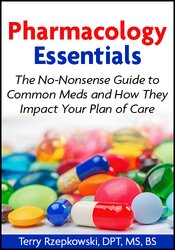
Pharmacology Essentials
The No-Nonsense Guide to Common Meds and How They Impact Your Plan of Care
- Speaker:
- Terry Rzepkowski, DPT, MS, BS
- Duration:
- 2 Hours 02 Minutes
- Format:
- Audio and Video
- Copyright:
-
Aug 08, 2024
- Product Code:
- POS065517
- Media Type:
- Digital Seminar

Description
Delve into specialized pharmacology essential for rehab professionals. Learn to manage medication-induced changes in patients safely, with insights from real-life case studies and interactive discussions. Enhance your ability to incorporate medication considerations into personalized rehabilitation plans for optimal patient care.
Credit
Speaker
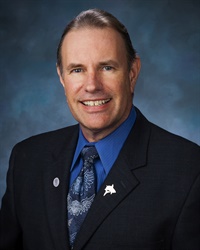
Terry Rzepkowski, DPT, MS, BS Related seminars and products
Terry L. Rzepkowski, DPT, MS, BS, is a Doctor of Physical Therapy with specialization in orthopedic physical therapy. Throughout his 40+ year career, he has specialized in orthopedic roles, total joint replacement surgery, sports medicine, musculoskeletal outpatient rehab, and as an independent private practitioner. A professor in the health science department for Nova Southeastern University, Terry provides instruction in anatomy, biomechanics, kinesiology, and neuro anatomy. Terry’s current clinical role as a home care physical therapist focuses exclusively on orthopedic surgical patients, which keeps Dr. Rzepkowski abreast of the latest techniques and protocols used in joint care rehab. As a sought-after presenter, he enjoys sharing his advanced orthopedic knowledge with interdisciplinary audiences around the country.
Financial: Terry Rzepkowski has employment relationships with Nova Southeastern University, CORA Physical Therapy, Presbyterian College, National healthcare Licensing Solutions, Inc., Varsity Tutors, and PTCE. He receives compensation as a national presenter. Terry Rzepkowski receives a speaking honorarium and recording royalties from PESI, Inc. He has no relevant financial relationships with ineligible organizations.
Non-financial: Terry Rzepkowski is a member of the APTA.
Additional Info
Access for Self-Study (Non-Interactive)Access never expires for this product.
Questions?
Visit our FAQ page at www.pesi.com/faq or contact us at www.pesi.com/info
Objectives
- Assess the functional impact of common medications on rehabilitation interventions, as measured by improved patient outcomes in therapy sessions. (Yoshimura, 2022)
- Identify medication-related functional implications in geriatric rehabilitation patients, leading to more effective treatment planning and interventions. (Kose, 2022)
- Evaluate and adapt therapy approaches to address medication-induced functional consequences, resulting in enhanced patient participation and improved functional outcomes. (Keijsers, 2021)
Outline
Principles of Pharmacology: Why Pharmacology Matters for Rehab Professionals
- Patient safety and maximizing therapeutic intervention outcomes.
- Pharmacodynamics - Mechanism of action and therapeutic effects
- Drug Interactions - Synergistic, additive, and antagonistic effects
Common Medications and Their Impact on Rehabilitation
- Cardiovascular Medications - Beta blockers, diuretics, ACE inhibitors, etc.
- Effects on heart rate, blood pressure, and endurance
- Pain Management - Opioids, NSAIDs, muscle relaxants, etc.
- Considerations in pain assessment and intervention
- Neuromuscular Agents - Antiepileptics, dopaminergic agents for Parkinson's, etc.
- Impacts on coordination, balance, and muscle tone
- Psychotropic Medications - Antidepressants, antipsychotics, anxiolytics, etc.
- Implications for cognition, mood, and behavior during therapy
- Respiratory Medications - Bronchodilators, corticosteroids, etc.
- Influence on breathing patterns, endurance, and aerobic capacity
Special Considerations in Geriatric Population
- Polypharmacy – prevalence
- Strategies to address and mitigate polypharmacy.
- Age-related changes: altered metabolism and excretion.
- Sensitivity to medications and side effects
Recognizing Medication-Induced Changes: Medications Leading to Adverse Effects Relevant to Rehabilitation
- Assessment and management strategies
- Dizziness, Vertigo, and Falls
- Fatigue and Sedation
- Impact on participation and endurance in therapy
- Modifications and precautions
- Adjustments in therapy approach and environment
Patient Education and Collaboration
- Empowering Patients
- Importance of medication adherence
- Recognizing side effects and when to seek medical advice
The Interdisciplinary Approach: Collaboration with Other Healthcare Professionals
- Value of collaboration between PT, OT, and other allied health professionals
Target Audience
- Athletic trainers
- Chiropractors
- Exercise Physiologists
- Occupational Therapists
- Occupational Therapy Assistants
- Physical Therapists
- Physical Therapy Assistants
- Physicians
- Podiatrists
- Strength and Conditioning Coaches
- Massage Therapists
- Other Rehabilitation and Fitness Professionals
Reviews
Satisfaction Guarantee
Your satisfaction is our goal and our guarantee. Concerns should be addressed to: PO Box 1000, Eau Claire, WI 54702-1000 or call 1-800-844-8260.
ADA Needs
We would be happy to accommodate your ADA needs; please call our Customer Service Department for more information at 1-800-844-8260.
PESI Mobile App
Access CE trainings on your phone or tablet through our free mobile app. Choose video or audio-only versions of online courses from the world’s best instructors, and complete your CE requirements anywhere, anytime, at your own pace.




Please wait ...