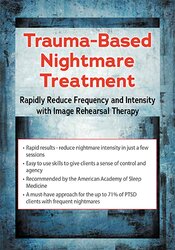
Image rehearsal therapy (IRT) is the evidence-based approach you need to rapidly reduce the frequency and intensity of your clients’ trauma-based nightmares.
Practical and straightforward IRT has empowered thousands of therapists to help their clients confront and change their nightmares with tools and coping skills to rehearse new positive dream scenarios and replace their fear and anxiety with feelings of safety and security.
And it can all be done in just a few sessions.
Now in this live online training, you’ll get a step-by-step guide to bring IRT into your practice in just one day.
Led by trauma treatment expert, Dr. Lillian Gibson, you’ll get session outlines, scripting and the detailed guidance you need to start using IRT right away and feel confident in knowing exactly what to do and what to say from the very first session.
When you register you’ll discover how you can:
- Use imagery exercises to empower clients and disempower nightmares
- Employ techniques to reinforce positive dream scenarios and outcomes
- Tailor IRT to meet the specific needs of your clients
- Enhance engagement and adherence to the therapy
- Manage nightmare anxiety and hyperarousal
- And much more!
And since IRT can be easily integrated with your current approaches, it’s a perfect complement to the trauma treatments you already use with clients.
Image Rehearsal Therapy is a must-have clinical tool if you work with trauma.
Don’t wait to help your clients stop the nightmares and get the restful night’s sleep they deserve.
Purchase now!