


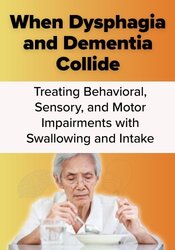
When Dysphagia and Dementia Collide: Treating Behavioral, Sensory, and Motor Impairments with Swallowing and Intake
- Speaker:
- Angela Mansolillo, MA/CCC-SLP, BCS-S
- Duration:
- 6 Hours 09 Minutes
- Format:
- Audio and Video
- Copyright:
-
Oct 03, 2025
- Product Code:
- POS065645
- Media Type:
- Digital Seminar

Description
Dehydration | Malnutrition | Aspiration Pneumonia | Confusion | Communication | Appetite
These aren’t just possible complications when dysphagia and dementia collide — they’re near certainties. The NIH reports that nearly half of institutionalized dementia patients have dysphagia.
If you work in dementia care — you’ve already seen these patients. The real question is: Are you equipped to meet their complex feeding needs with interventions that truly improve outcomes?
Good news, today you have an incredible opportunity to team up with Angela Mansolillo, MA/CCC-SLP, BCS-S, and turn expert led education into masterfully skilled preparation. With over 30 years of experience treating both adult and pediatric populations in a variety of settings, Angela will show you how to confidently assess and treat age-related changes in sensory and motor function in addition to those produced by neuropathology.
You’ll learn so much more than simply treating a person’s ability to swallow; you’ll walk away with actionable neurobehavioral strategies to combat loneliness, isolation, depression and loss of dignity surrounding meals.
Now is the time to reimagine quality of living for your dementia patients and their families. Purchase today!
Credit
Speaker
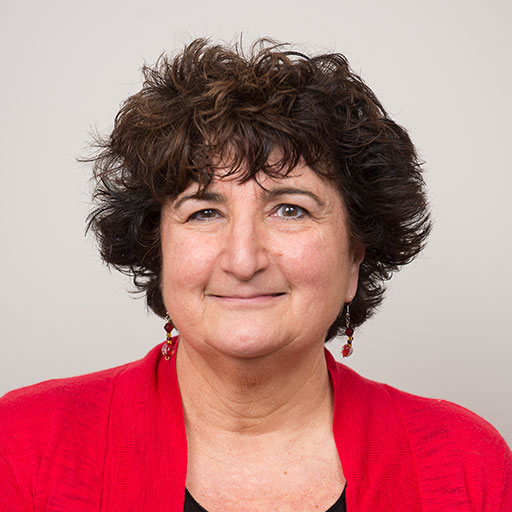
Angela Mansolillo, MA/CCC-SLP, BCS-S Related seminars and products
Angela Mansolillo, MA/CCC-SLP, BCS-S, is a speech-language pathologist and board-certified specialist in swallowing disorders with more than 30 years of experience. She is a senior speech-language pathologist at Cooley Dickinson Hospital in Northampton, Massachusetts where she provides evaluation and treatment services for adults and children with dysphagia and is involved in program planning and development including quality improvement initiatives, patient education, and clinical policies and protocols. She is also adjunct faculty at Elms College Department of Communication Sciences and Disorders in Chicopee, Massachusetts and a guest lecturer in the Department of Communication Disorders at the University of Massachusetts. Over the course of her career, she has worked in a variety of clinical settings with children and adult populations with a career-long focus on feeding and swallowing disorders. Recently, she authored Let’s Eat!: A Clinical Guide to the Management of Complex Pediatric Feeding and Swallowing Disorders. Angela is a recent recipient of the Massachusetts Speech and Hearing Association’s Award for Clinical Excellence and is a sought-after speaker for both live and online continuing education courses as she seamlessly blends current research with clinical experience.
Speaker Disclosures:
Financial: Angela Mansolillo has an employment relationship with Elms College and Cooley Dickinson Hospital. She is a consultant with Dysphagia Services and receives speaking honorarium from ContinuEd, Medbridge, Advantage CE, and Dilgem Continuing Education. Angela Mansolillo receives a speaking honorarium, recording, and book royalties from PESI, Inc. She has no relevant financial relationships with ineligible organizations.
Non-financial: Angela Mansolillo is a member of ASHA.
Additional Info
Access for Self-Study (Non-Interactive)Access never expires for this product.
Questions?
Visit our FAQ page at www.pesi.com/faq or contact us at www.pesi.com/info
Objectives
- Differentiate stages of degenerative change and examine the stages of normal swallowing.
- Examine the prevalence and progression of dysphagia, as related to function, in dementia patients.
- Identify key elements necessary for the development of a comprehensive dysphagia evaluation including physical, cognitive, and sensory complications that can affect eating and drinking.
- Examine risk factors for development of aspiration related illness in individuals with dementia.
- Develop modified feeding interventions through each stage of dementia to improve patient level of functioning and performance with meal time related activities.
- Analyze current evidence-based case studies for dysphagia and applicable treatment interventions.
- Identify ethical considerations in end of life care for patients with dementia and their caregivers.
Outline
Colliding Challenges: The Dual Impact of Dementia and Dysphagia
- What Is Dementia Really Doing to the Brain & Body?
- Cognitive, Physical & Sensory changes
- Changes in swallowing
- From Income to Community: Social Determinants Impacting Aging
- Frailty and Sarcopenia
- Swallowing the Facts: How Common Is Dysphagia in Dementia
- Cognitive Reserve, Delirium and Dementia
- What Is a Cognitive Reserve Model and why is it important?
- Dementia Types and What They Mean for your Plan of Care:
- Alzheimer s disease
- Lewy Body Dementia
- Vascular Dementia
- Fronto-temporal dementias
Understanding the Swallowing Process
- Age-related changes in sensory and motor function
- Neuropathological effects on swallowing
- Behavioral, sensory, and preliminary motor acts in preparation for swallowing
Factors Affecting Swallowing in Dementia
- Improving Motor Function to Makes Meals Less Miserable
- How to skillfully turn the table when posture, weakness, and tremors subtly disrupt eating patterns, schedules, and success
- What To Do When the Senses Slip?
- Rebuild your clients’ ability and desire to eat when taste, temperature, or hunger signals fade
- Mealtime Mayhem: Navigating Environmental Sabotage
- Noise, lights, temperatures, and distractions—mealtime’s hidden disruptors and what you can do about them!
- Not Simply A ‘Dry Mouth’
- Learn how oral health issues, dentures, and common medications can create unexpected barriers to comfortable and safe eating
- Dining Déjà Vu: Cognitive Challenges Making Meals Feel Familiar but Foreign
- How to intervene when memory, organization and communication challenges affect food preferences, shape mealtime experiences, and turn into a much bigger problem
Clinical Assessment of Dysphagia in Dementia
- Screening and evaluation tools
- Clinical and Instrumental assessment
- Pulmonary clearance and risk factors for aspiration related illness
Putting a Multi-Modality Plan into Place
- Diet Modification – compensation vs stimulation
- Environmental Modifications – visual, olfactory, auditory, physical changes to facilitate appetite, maintain self-feeding, and improve overall intake
- The role of exercise – when, what, who?
- Helping the Medicine go Down – facilitating medication administration
- Managing Care Resistant Behaviors
- Creative solutions to maintain the appearance of a normal diet while altering textures
- Adaptive Equipment and strategies for preservation of enjoyment of food and aiding independence
- Caregiver training and strategies for managing meal-related behaviors
Ethical Considerations and Person-Centered Care
- Tube Feeding: Yay or Nay?
- Balancing safety with quality of life
- End of Life Considerations: Addressing depression and appetite loss
Case Studies and Practical Application
- Real-world examples of dysphagia management in dementia care
- Interactive problem-solving exercises
- Multidisciplinary collaboration for comprehensive patient care
Mastering Preparedness for Dementia & Dysphagia Care
- Key takeaways and best practices
- Resources for ongoing education and professional development
Target Audience
- Speech-Language Pathologists
- Registered Nurses
- Occupational Therapists
- Occupational Therapy Assistant
- Long Term Care Administrators
Reviews
Satisfaction Guarantee
Your satisfaction is our goal and our guarantee. Concerns should be addressed to: PO Box 1000, Eau Claire, WI 54702-1000 or call 1-800-844-8260.
ADA Needs
We would be happy to accommodate your ADA needs; please call our Customer Service Department for more information at 1-800-844-8260.
PESI Mobile App
Access CE trainings on your phone or tablet through our free mobile app. Choose video or audio-only versions of online courses from the world’s best instructors, and complete your CE requirements anywhere, anytime, at your own pace.




Please wait ...